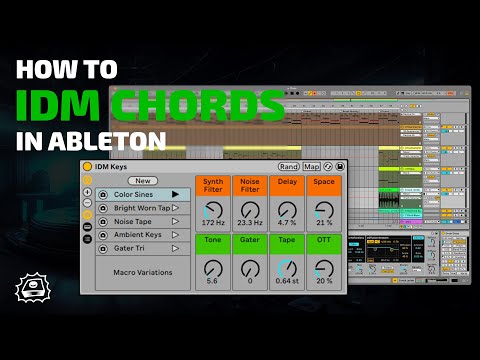
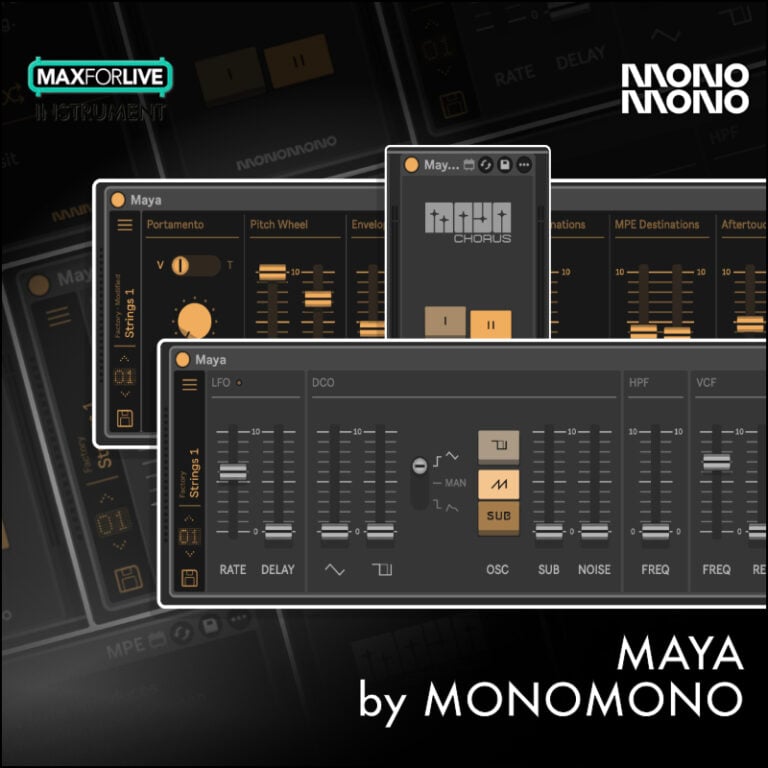
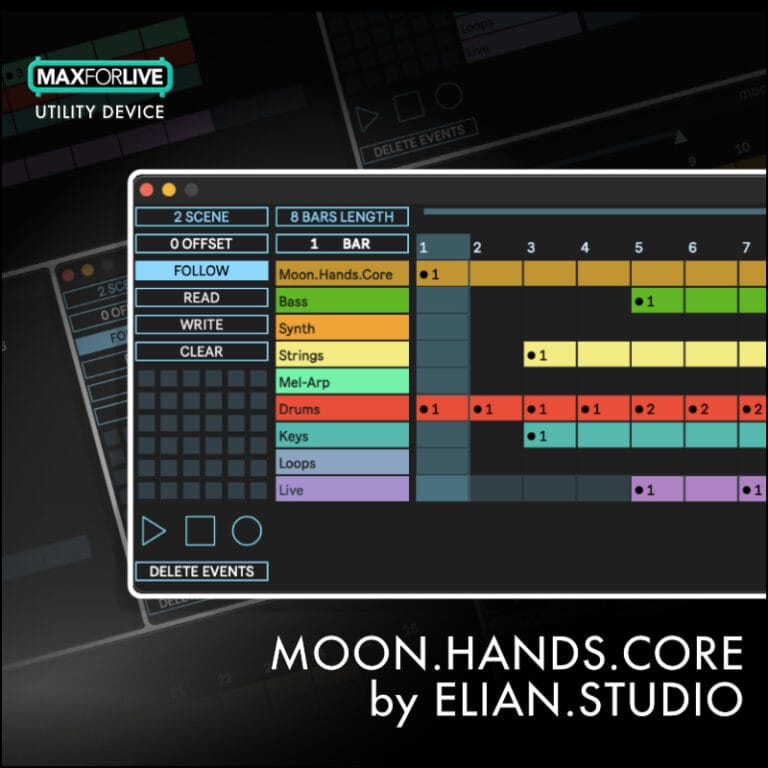
Side Brain crafts an IDM track from scratch using custom presets, evolving chord variations, free Max for Live tools, and glitch sequencers—all inside Ableton Live.
Side Brain builds complex melodic layers with free tools and advanced modulation
In this deep-dive session, Side Brain explores how to create expressive IDM-style tracks in Ableton Live using a combination of rich chord progressions, advanced modulation devices, glitch sequencing, and free Max for Live tools. Starting with moody minor harmonies and ending with randomized per-step textures, this session is a masterclass in sound movement and experimental production techniques.
Setting the Tone: Chords and Smooth Variations
Using a custom Ableton instrument rack loaded with macros and FX, Side Brain crafts melancholic progressions in A minor. Instead of sticking with a single preset, he leverages the free Max for Live device Smooth Automator, which allows seamless morphing between macro variations. This keeps even the simplest loop evolving over time, injecting life into the harmonic foundation.
Controlled Chaos: Stuttering and Automation
A key feature in IDM production is glitch-style variation. Using Beat Repeat in instrument mode with chance set to zero, Side Brain demonstrates how to manually trigger rhythmic stutters—or automate them with a mouse if no MIDI controller is available. For more controlled randomness, the LFO 3.1 Max for Live device is introduced, allowing precise probability-based on/off modulation using binary waveforms.
Lo-Fi Flavor with Free Tools
To add tape-like texture, the free Color device from the Stray Cats pack by Max for Cats is used. With controllable vinyl noise, flutter, and saturation, it’s an excellent way to dial in worn-out, nostalgic vibes without reaching for third-party plugins.
Sequencing with SQ: Glitchy Arps and Evolving Phrases
For the melodic top layer, a glitchy pluck preset is fed into the SQ sequencer from the new Ableton sequencer pack. With scale-locked pitch steps, randomized octave shifts, velocity mapping, and ratcheting, it’s easy to generate modular-style arpeggios and evolving loops. Conditions allow steps to trigger only every few cycles, making repetition more musical and less predictable.
Layering Modulation and Spatial FX
Wrapping things up, utility devices are used to automate panning, while custom envelopes and filters shape each layer. The result is a spacious, dynamic, and rhythmically intricate composition that feels alive—even when built from loops.