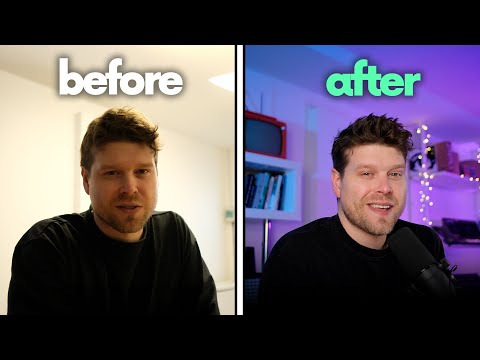
Quitting a stable teaching job in London and moving to the countryside is a bold move. Doing it to go all-in on Ableton Push, content creation, and music production is even bolder. In this video, Craig from Push Patterns documents the complete journey of turning a humble rented garage into a fully functioning filming space and music studio.
This isn’t a luxury studio build with infinite budget or permanent alterations. It’s a realistic, rental-friendly setup built around flexibility, smart compromises, and a clear creative vision.
By the end of the video, the transformation is dramatic: from a bare garage to a space that both looks great on camera and works as a serious Push-centred production environment.
The Vision for Push Patterns HQ
From the outset, the space was divided into clear zones:
Filming and content creation area
A dedicated talking-head setup with controlled lighting, a strong background aesthetic, and clear sightlines into the studio world.
Studio and synth zone
A practical production area built around Ableton Push 3 as the main brain, with modular, hardware synths, and hands-on workflow.
Because the garage is rented, everything needed to be reversible. No drilling where possible, minimal permanent soundproofing, and gear choices that could adapt if the space changes again in the future.
Finding the Right Camera Angles
Before buying more gear or finalising layouts, Craig focuses on the most important part of any YouTube studio: the camera angle.
Filming into the corner of the room became the key decision. This approach:
- Adds depth and visual interest
- Shows the studio naturally, without feeling staged
- Gives viewers a genuine glimpse into the creative space
The main camera setup uses a Fujifilm X-S20 with a 23mm prime lens for the talking-head shot, paired with a second X-S20 and a Sigma zoom lens for overhead and desk shots.
A No-Drill Camera Mounting Solution for Renters
Traditional tripods and overhead rigs don’t work well in small rented spaces, especially with a standing desk. The solution here is clever, sturdy, and renter-approved.
Manfrotto arms and auto poles
Instead of floor stands or ceiling mounts, Craig uses Manfrotto arms and tension-based poles that lock securely between floor and ceiling. These support both main and overhead cameras without nails, screws, or permanent fixtures.
Despite being fully extended, the setup remains impressively stable, even with heavier camera bodies and lenses. It’s an investment, but one that pays off in reliability and peace of mind.
Standing Desks, Better Posture, Better Workflow
One of the biggest workflow upgrades in the new studio is switching to a height-adjustable desk.
The FlexiSpot standing desk allows Craig to:
- Maintain a consistent listening and filming position
- Stand for admin and editing work
- Reduce slouching and back strain during long sessions
With dual motors, quiet operation, memory presets, and enough height for a 6’4″ frame, it fits both music production and content creation without compromise.
Staying Active in the Studio
Under the desk sits a walking pad, adding another layer to the studio’s long-term sustainability.
While not traditionally “music gear”, the walking pad makes it possible to stay active during:
- Emails and admin
- Light Ableton sessions
- Sound browsing and editing
For producers spending hours in windowless rooms, this kind of setup can make a real difference to health and focus.
Sound in a Converted Garage: Making Compromises
The biggest limitation of the space is sound. With minimal insulation and neighbours to consider, full speaker-based mixing isn’t realistic.
Desktop monitors for vibe
Adam Audio D3V desktop monitors provide controlled, low-volume playback for general listening and inspiration. Their compact size, DSP room settings, and front-mounted controls make them ideal for small, untreated rooms.
Headphones for critical work
The real heavy lifting happens on Sony MDR-7506 headphones. Honest, affordable, and unforgiving, they’re a long-standing studio standard for a reason. If a mix works here, it usually works everywhere else.
Recording Clean Vocals in an Untreated Room
For voice work, Craig relies on a familiar YouTube and broadcast classic:
- Shure SM7B microphone
- Cloudlifter for clean gain
- Focusrite Scarlett 4i4 (4th Gen) interface
The SM7B’s tight pickup pattern helps minimise room reflections, while the latest Focusrite preamps provide plenty of clean gain without noise. It’s a reliable chain that works perfectly in less-than-ideal acoustic environments.
DIY Acoustic Panels That Move With You
Rather than investing heavily in permanent treatment, Craig reuses DIY acoustic panels built for previous studios.
These panels:
- Reduce vocal reflections and echo
- Are fully portable
- Have survived multiple studio moves
More panels are planned, and a future video will document the full DIY build process for anyone wanting to save money and improve their own room acoustics.
The Synth Station and Push 3 Workflow
Behind the camera setup sits the heart of Push Patterns HQ.
Ableton Push 3 acts as the central brain, handling sequencing, performance, and control duties. Hardware synths, modular gear, and effects are routed through an RME Fireface interface, with plans for a streamlined, door-less workflow enabled by recent Push updates.
This area is still evolving, but the intention is clear: Push first, screen second, creativity always front and centre.
The IKEA Hack Every Studio Needs
One of the most talked-about elements in Craig’s studios is his IKEA Stolmen shoe rack hack.
Originally designed for shoes, it turns out to be perfect for synths. It’s:
- Wide enough for classic keyboards
- Floor-to-ceiling without drilling
- Far more characterful than standard metal racks
Filled with instruments like the Prophet-6, Moog Little Phatty, and touring-worn favourites, it becomes both storage and visual centrepiece.
A Studio Built for the Long Game
Push Patterns HQ isn’t about perfection. It’s about intention.
Every choice in this garage studio balances creativity, practicality, and the realities of renting. From no-drill camera rigs to headphone-first mixing, it’s a blueprint many producers and content creators will recognise themselves in.
And this is only the beginning. As the space evolves, so will the workflows, the Push-centred experiments, and the videos coming out of it.
If you’re interested in Ableton Live, Push 3, and building a studio that actually fits real life, Push Patterns HQ is officially open.