
Console 40 by MONOMONO
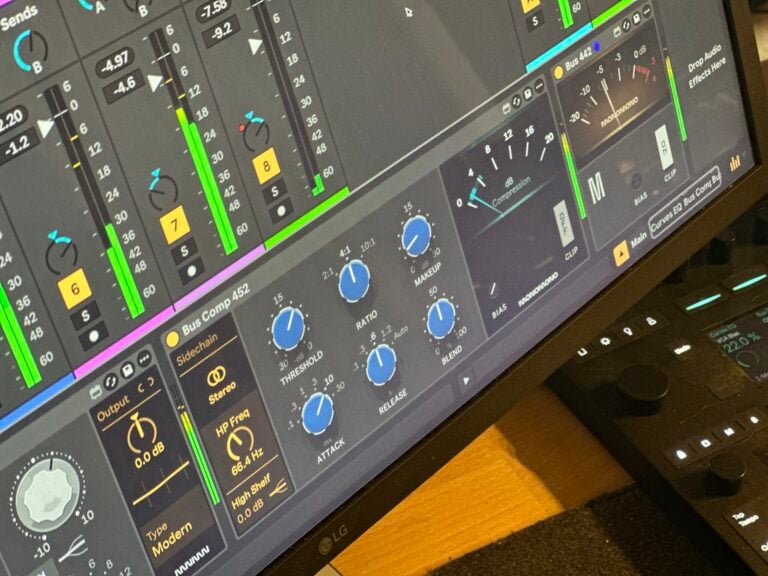
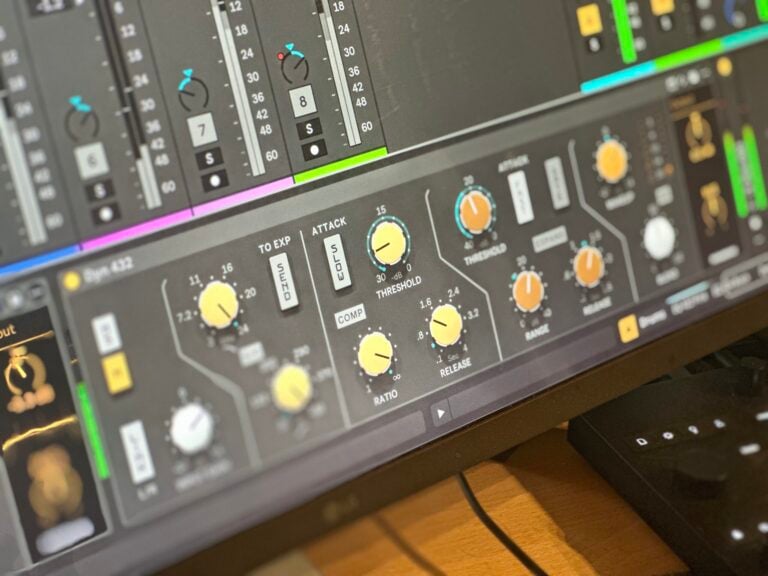
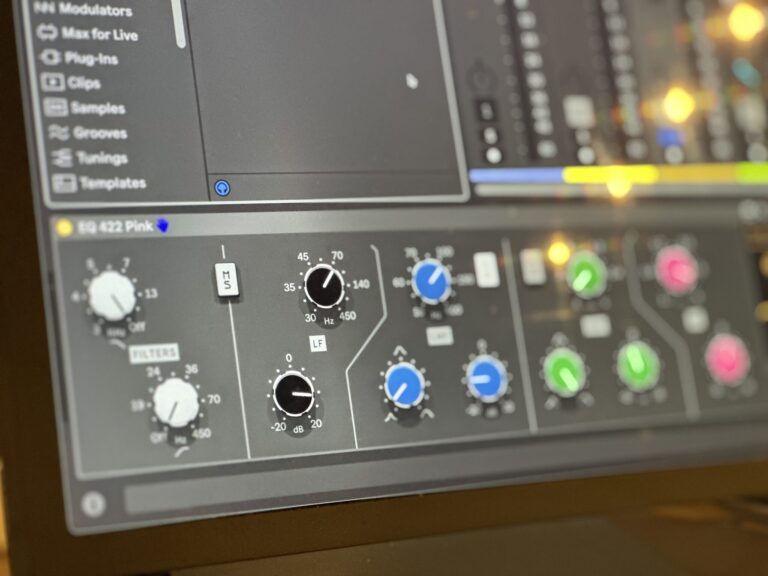
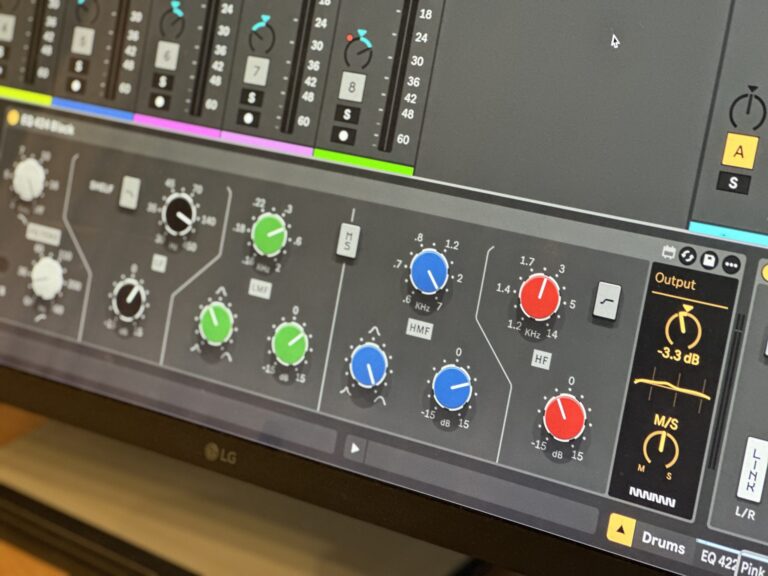
LARGE FORMAT CONSOLE SUITE FOR ABLETON LIVE Console 40 brings the circuit-level character of the SSL SL 4000 series into Ableton Live. Built component by component, tolerances included, it captures the EQ, dynamics and saturation of one of the most recorded consoles in history. Every device in the suite was modelled by studying the hardware variants across three decades of production. • EQ 422 Pink: Four-band parametric EQ with high- and low-pass filters, gain-dependent bell widths, and ×3 and ÷3 switches that extend the mid bands deep into the lows or high into the air. • EQ 424 Black: Four-band parametric EQ with constant-width bells at any gain, a resonance trim on the high-pass, and shelf or bell toggles on the LF and HF bands for precise, surgical control. • EQ 420: A streamlined version of the 422, with four bands and wider range for fast, natural tone shaping without the additional filters or M/S options. • Dyn 432: Channel dynamics modelled from the hardware, covering compression and gating on every channel. • Bus 442: Mix bus processing drawn from the console's master section. • Harmonic Saturation: Inductor-circuit saturation that adds presence and richness, most noticeable on vocals, guitars, snares and synths. • Bus Comp 452: Bus compressor modelled from the console's legendary stereo bus compressor.
Overview
Large format console suite for Ableton Live
Console 40 is a Max for Live suite built from the circuits of the SSL SL 4000 series, the desk behind 83% of Billboard number-one singles in 1996. Each device was assembled component by component, tolerances and all, so no two channels respond in quite the same way. You hear the weight of a real desk because the modelling starts at the component level, not at the curve shape.
The suite covers the full signal path: two distinct EQ topologies (Pink and Black), a streamlined four-band EQ, channel dynamics, harmonic saturation, a mix bus processor and the bus compressor. The Pink EQ widens on gentle moves and tightens as you push, which means broad strokes stay musical on their own. The Black holds its width at every gain setting, because precise surgical work should never drift when you dig in deeper.
- EQ 422 Pink, a four-band parametric EQ with high- and low-pass filters, gain-dependent bell widths that widen on gentle moves and tighten as gain increases, and ×3 and ÷3 switches that extend the mid bands from the deep lows to 17 kHz
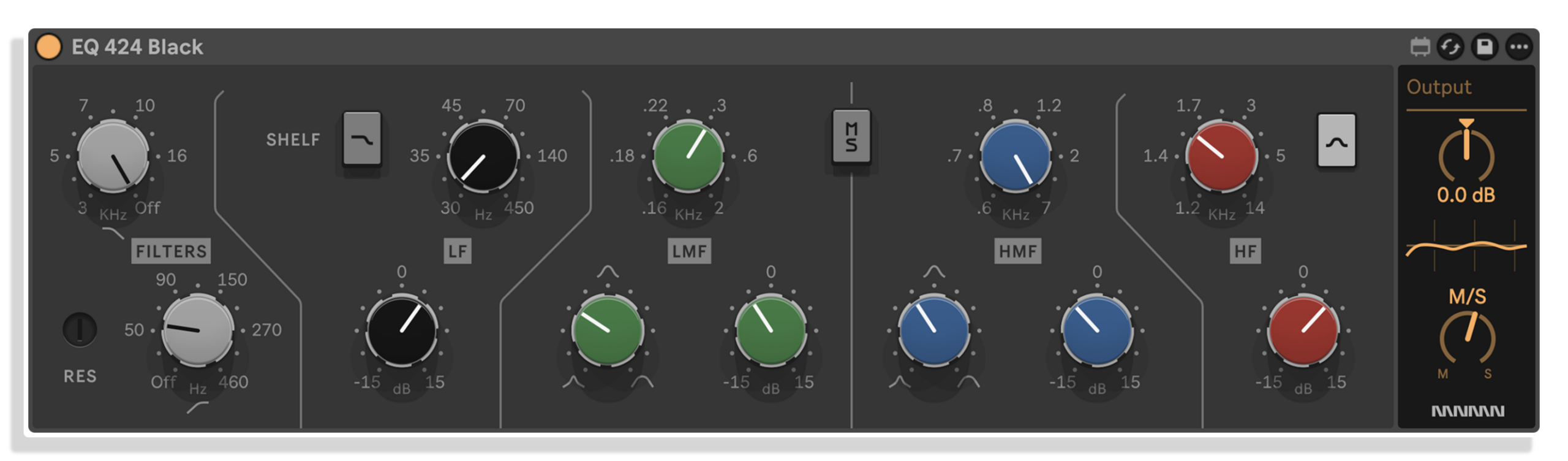
- EQ 424 Black, a four-band parametric EQ with constant-width bells at any gain, a resonance trim on the high-pass, and shelf or bell toggles on the LF and HF bands for precise lifts and clean scoops
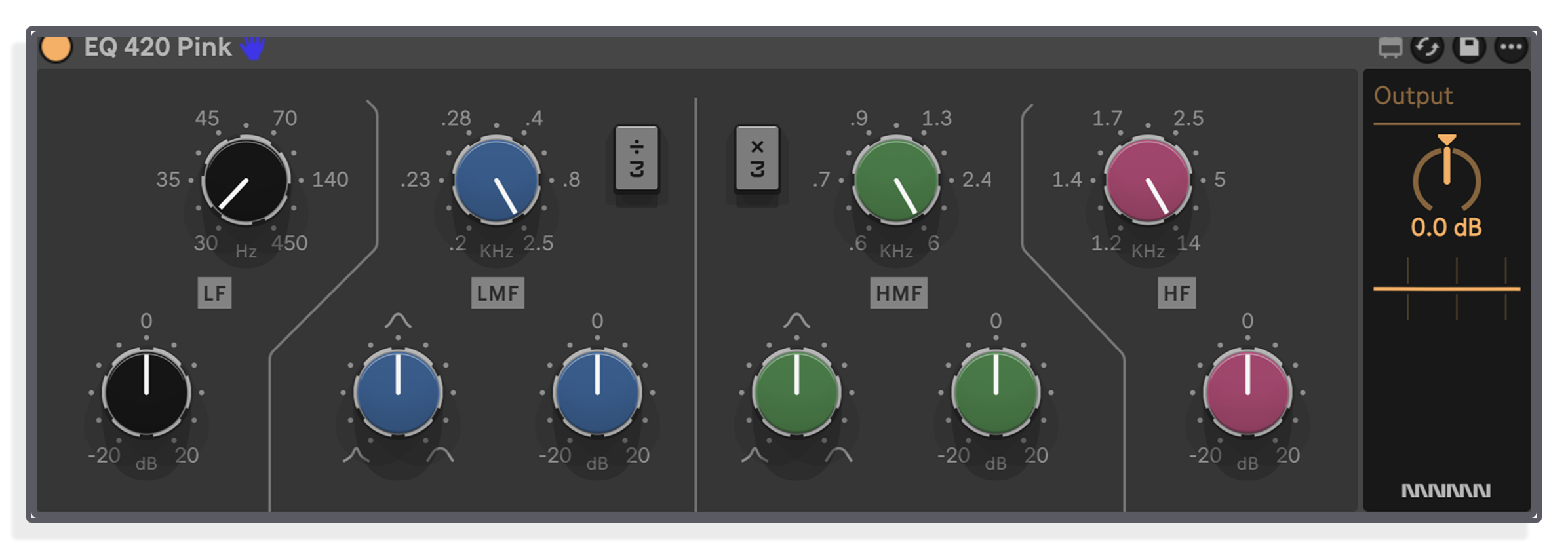
- EQ 420, a streamlined four-band version of the 422 with wider band interaction range and a simpler layout for fast, natural tone shaping
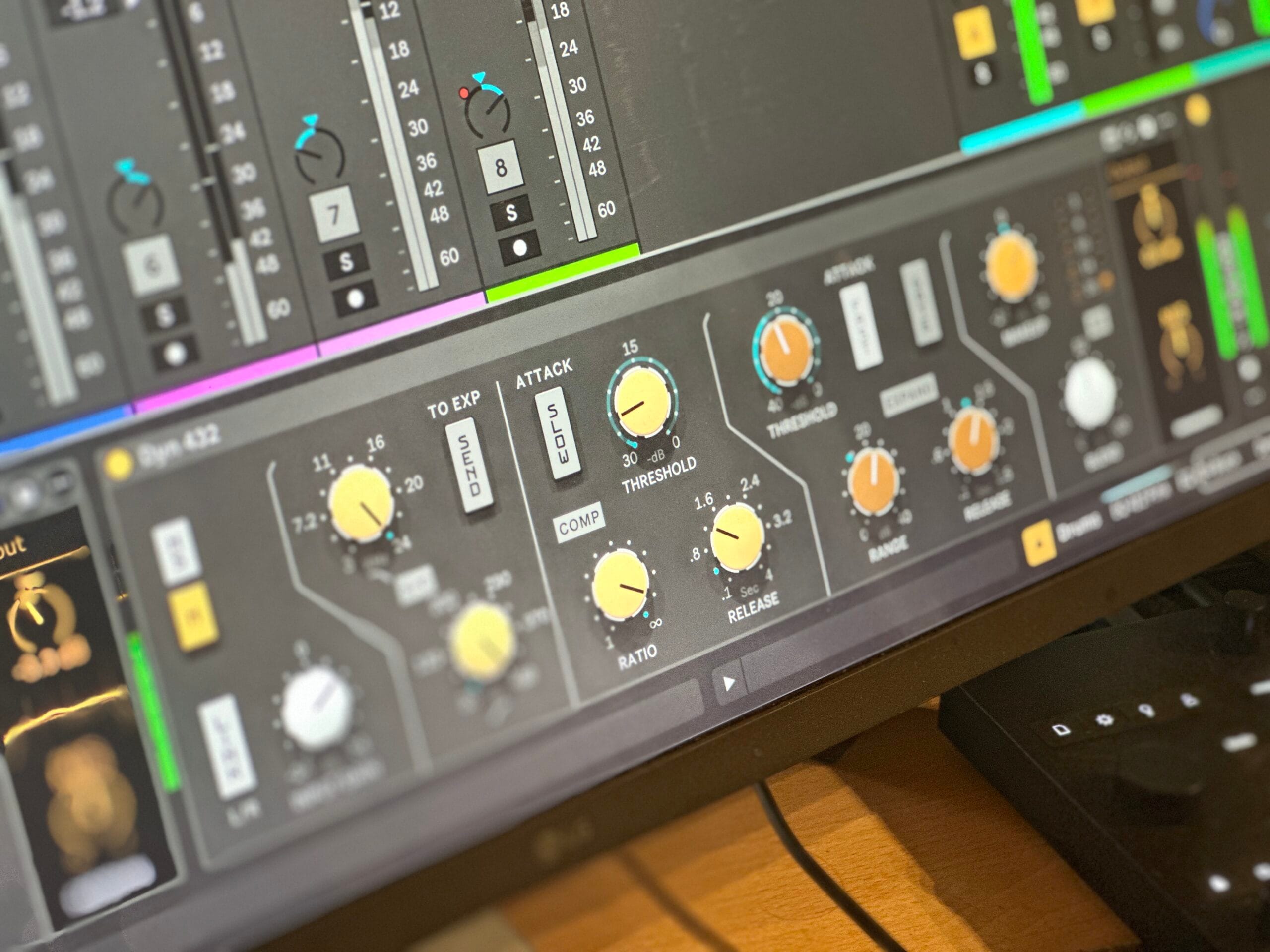
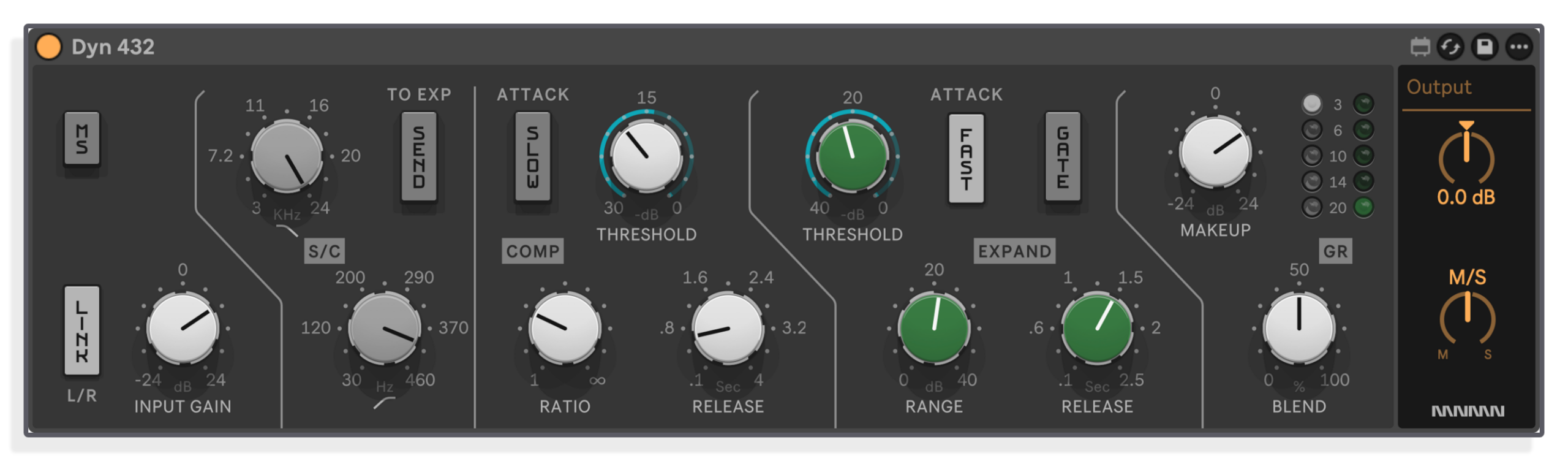
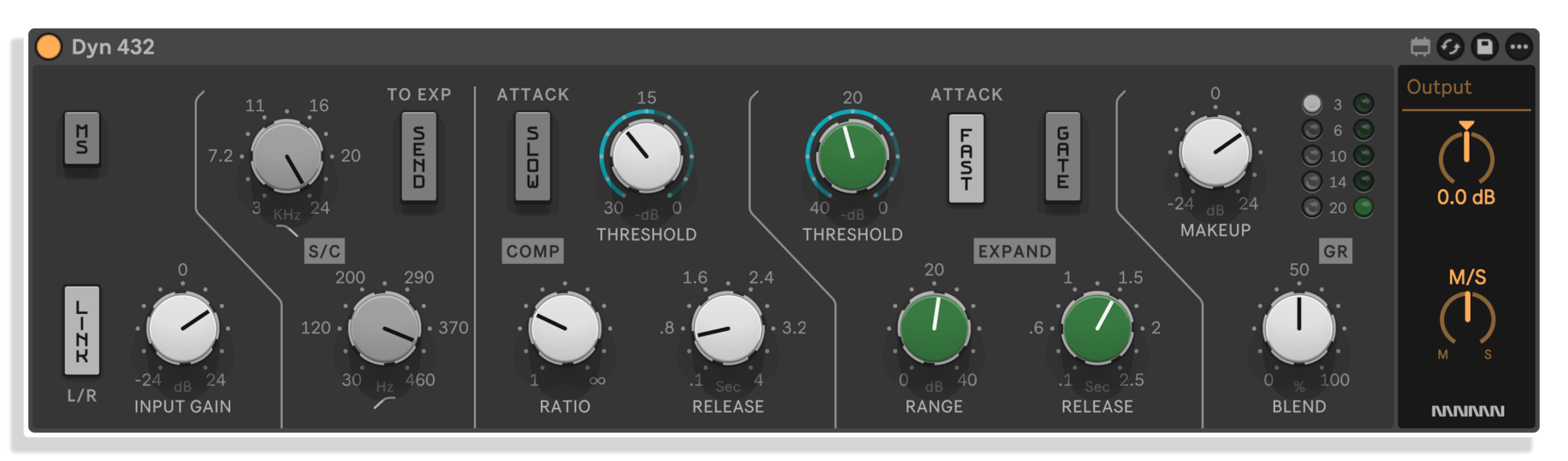
- Dyn 432 channel dynamics, modelled from the hardware compressor and gate found on every channel of the original console
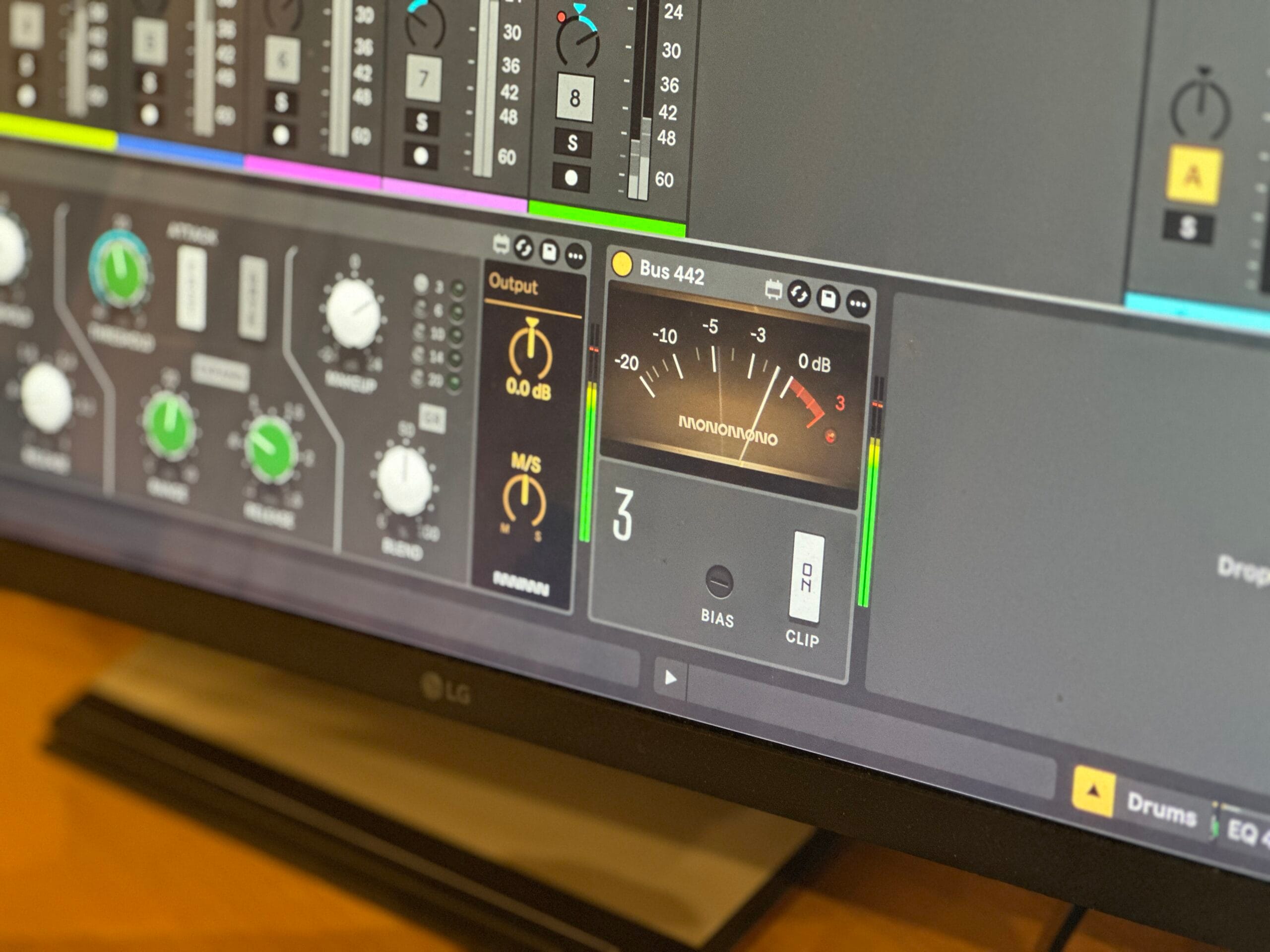
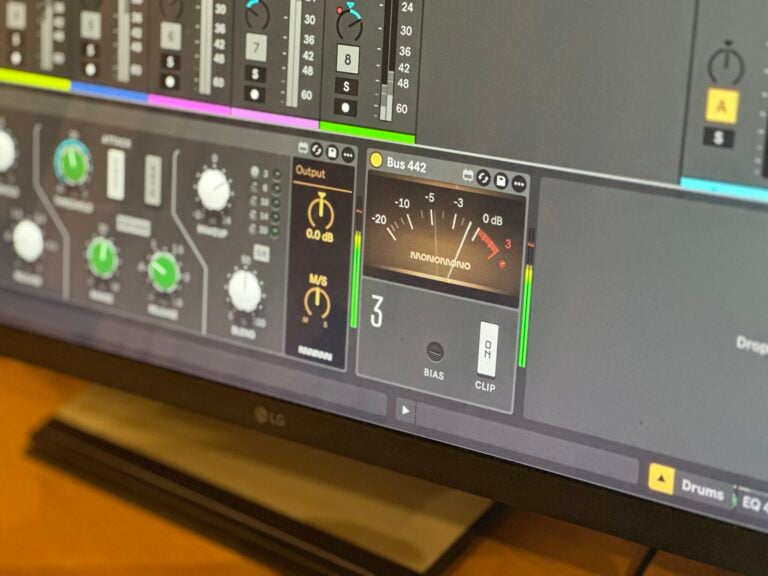
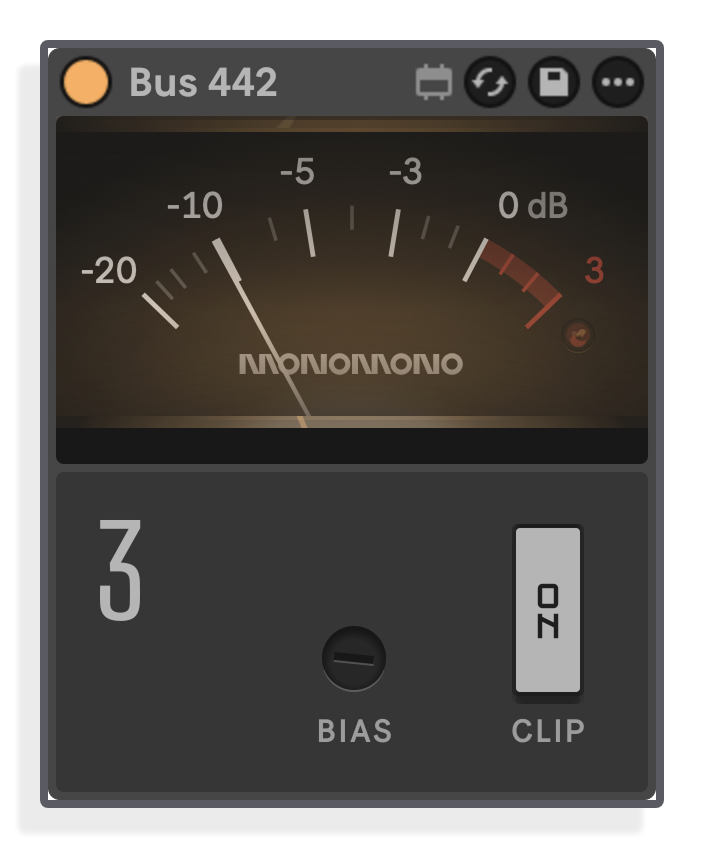
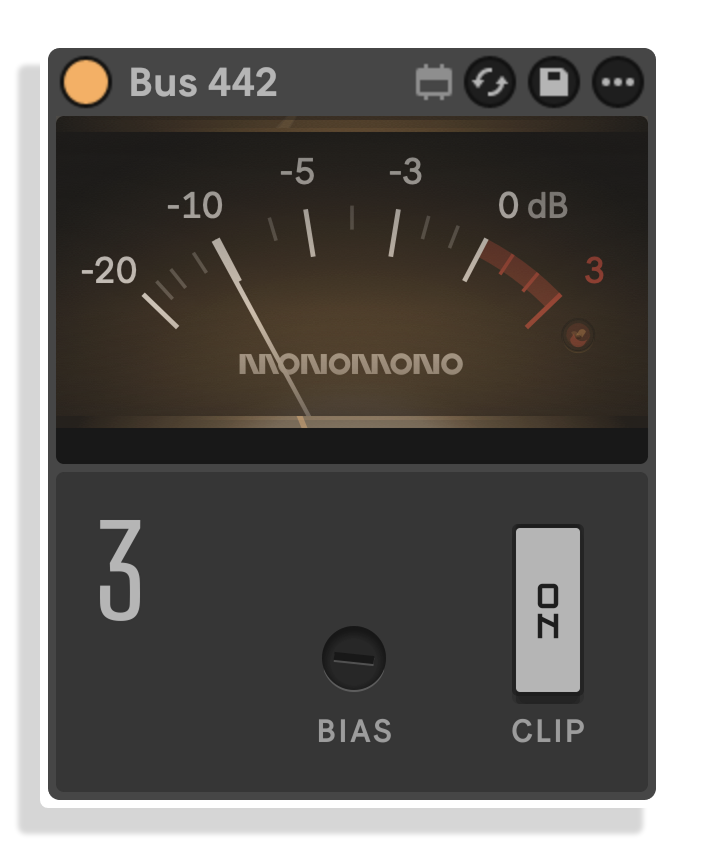
- Bus 442 mix bus processor drawn from the console’s master section
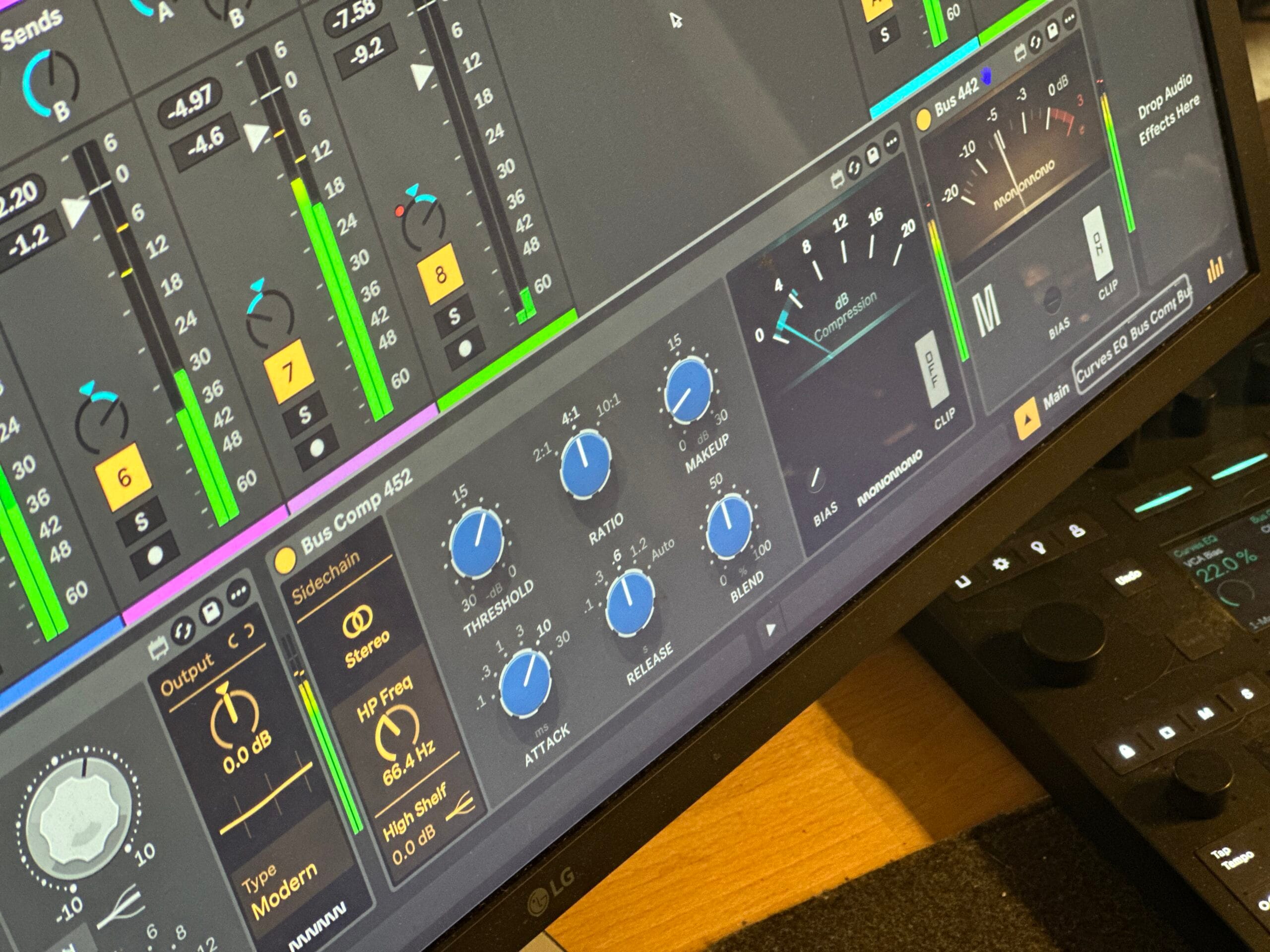
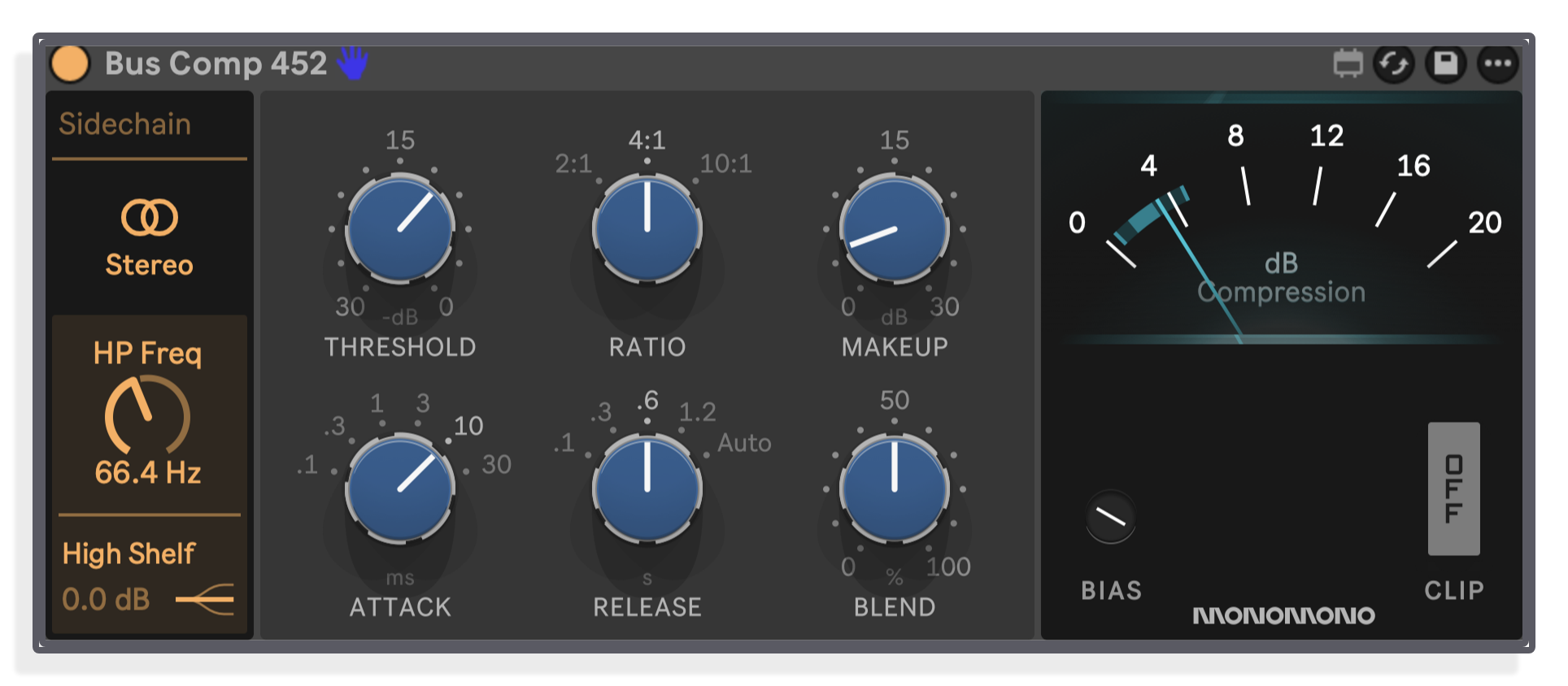
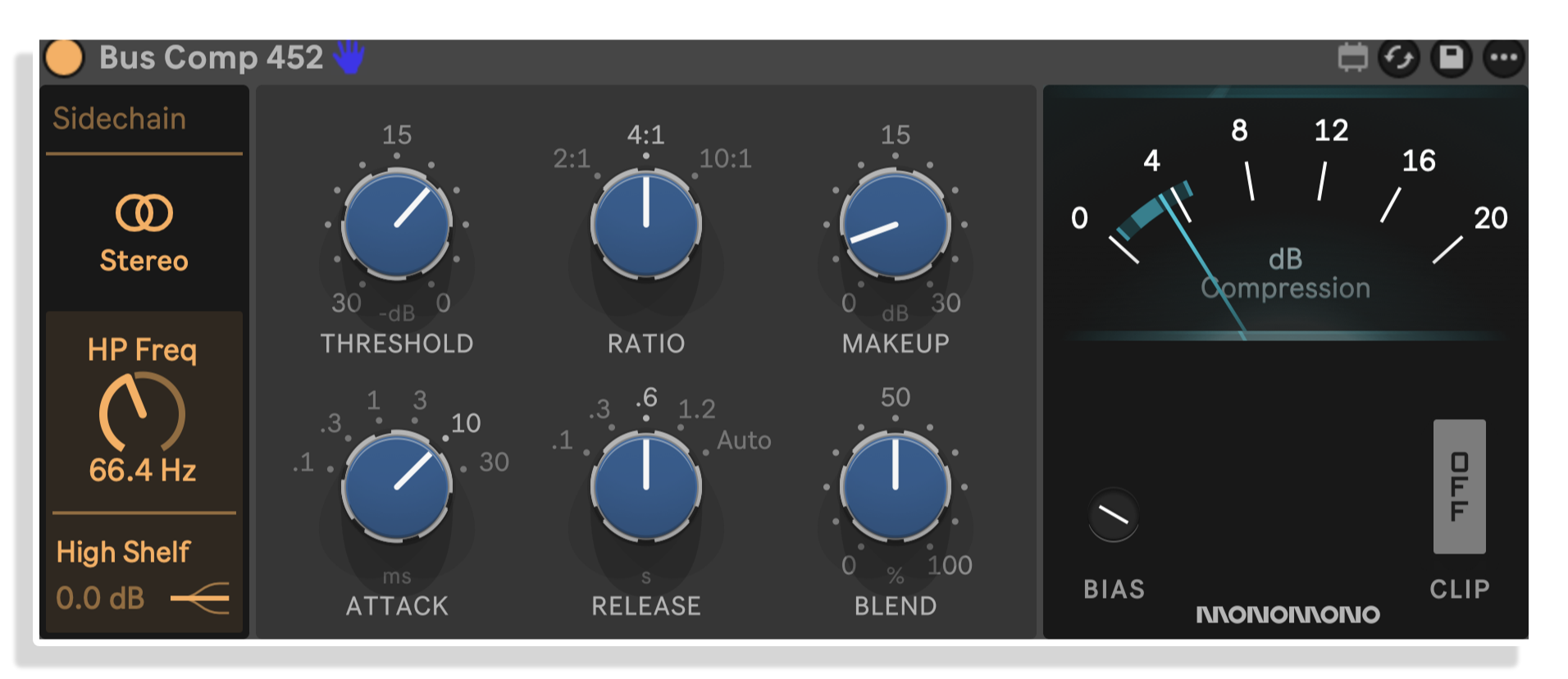
- Bus Comp 452, a stereo bus compressor modelled from the console’s legendary mix bus circuit
- Harmonic saturation modelled after inductor-based passive EQ circuitry, adding subtle musical saturation with presence and richness on vocals, guitars, snares and synths
- Component-level modelling with built-in tolerances, so no two channels respond identically, matching the behaviour of the original hardware
- Both EQ topologies included in a single suite, allowing purposeful channel strips to be built for specific material by combining the Pink and Black cards
- Max for Live Audio Effect .amxd device
- User manual (PDF)
Reviews
No reviews yet. Be the first to review this product.
Console 40
Bus 442
A whole large format console mixing workflow in your Live session
Console 40
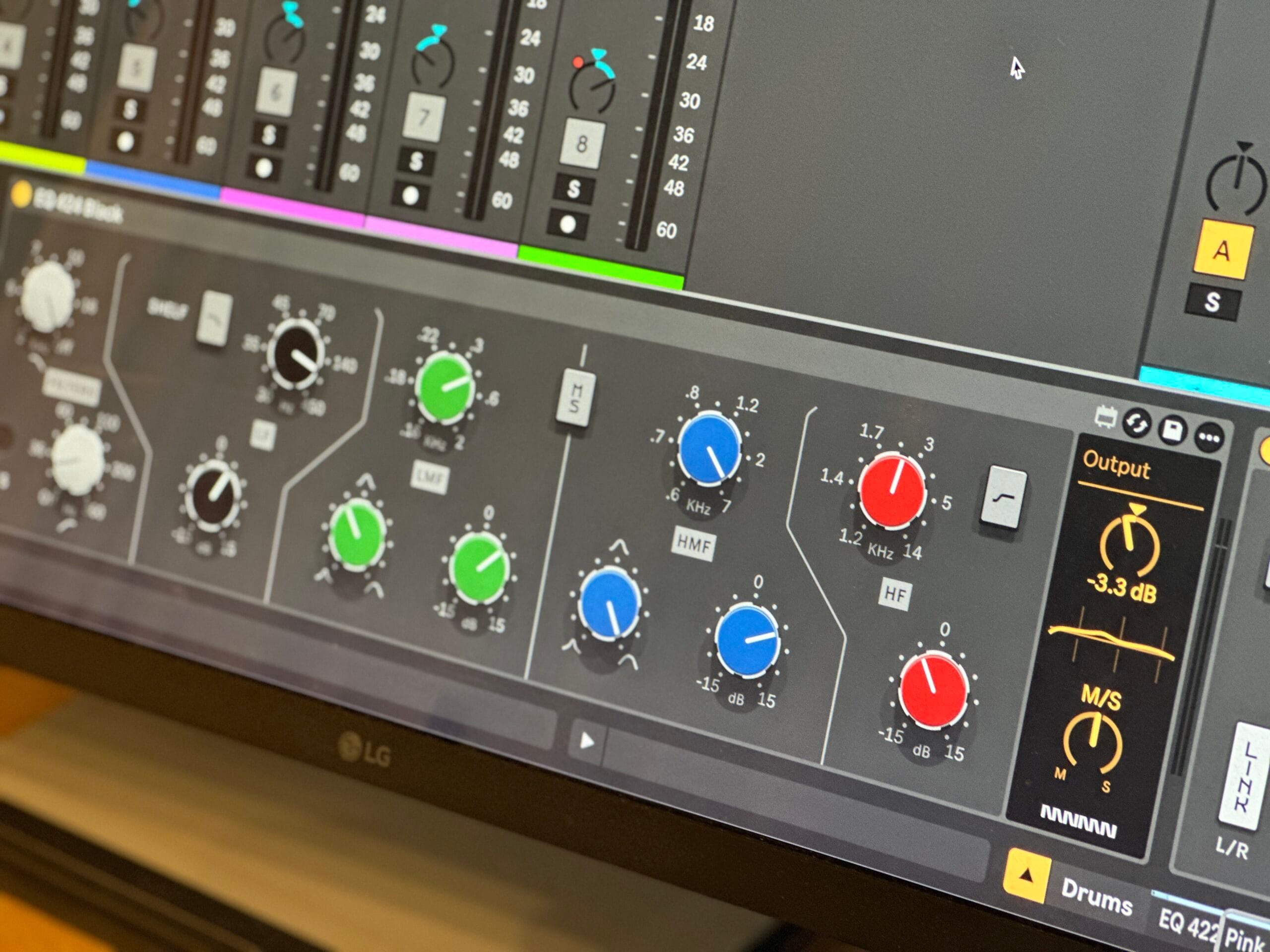
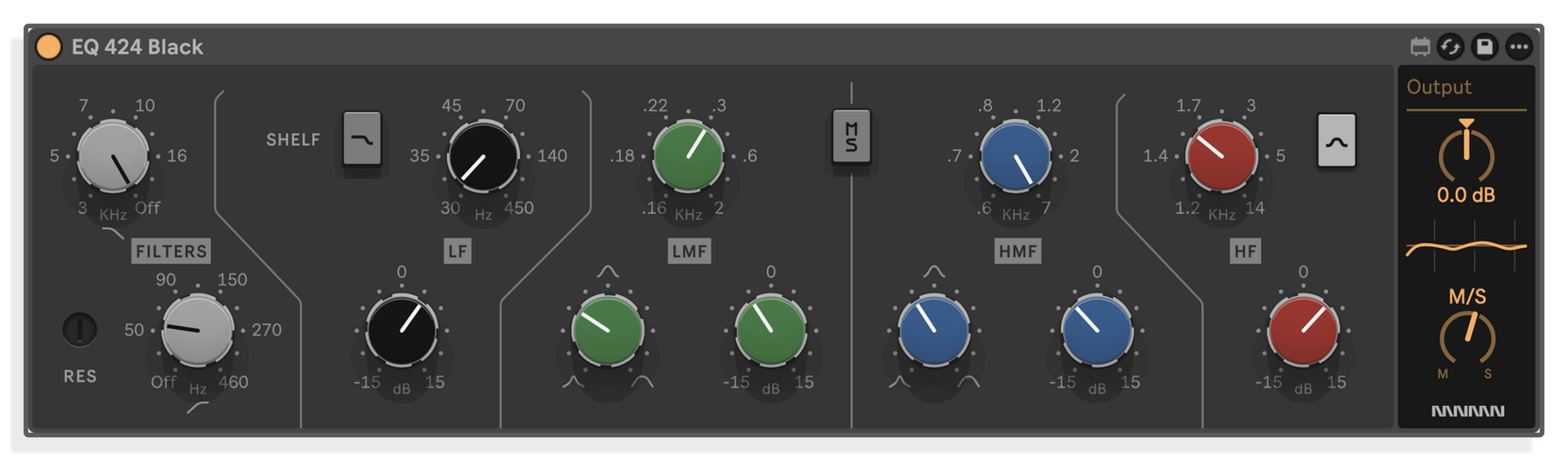
EQ 424 Black
The bold channel EQ. Four bands, high- and low-pass filters and M/S, for shaping hard.
Console 40
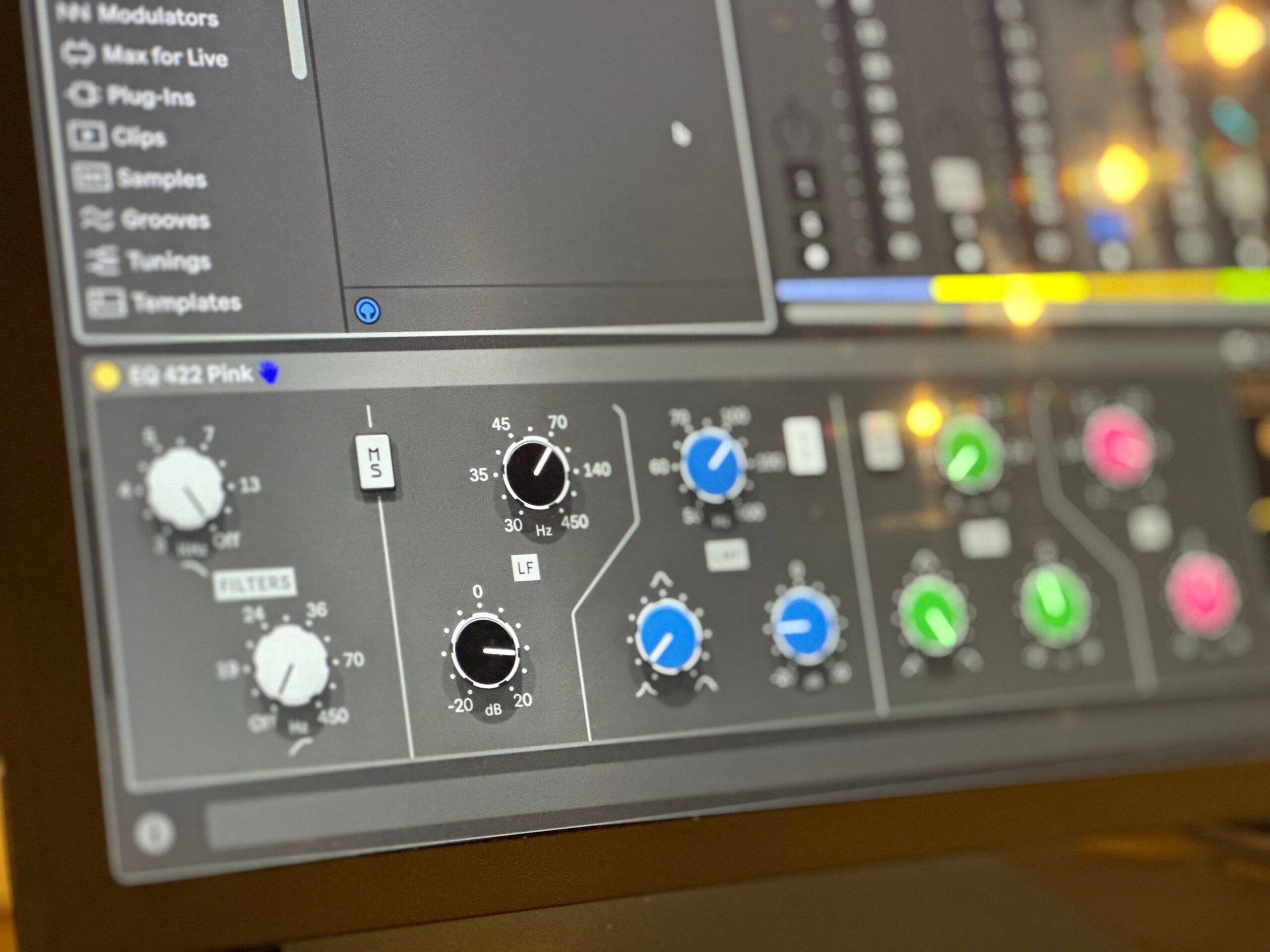
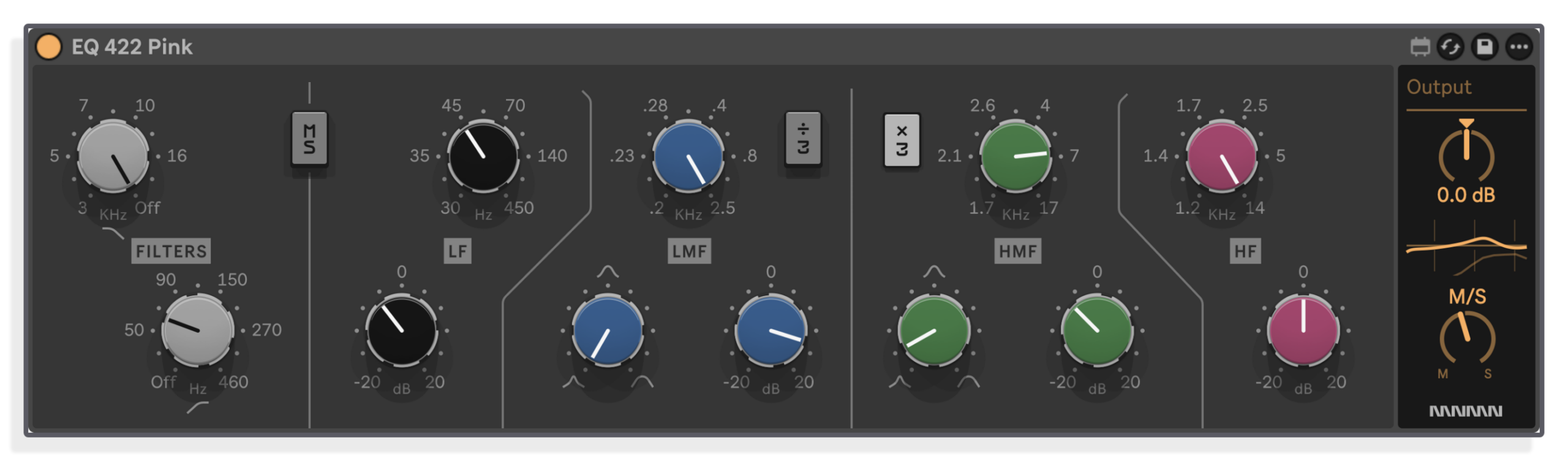
EQ 422 Pink
The older, gentler EQ voice, for musical broad strokes.
Console 40
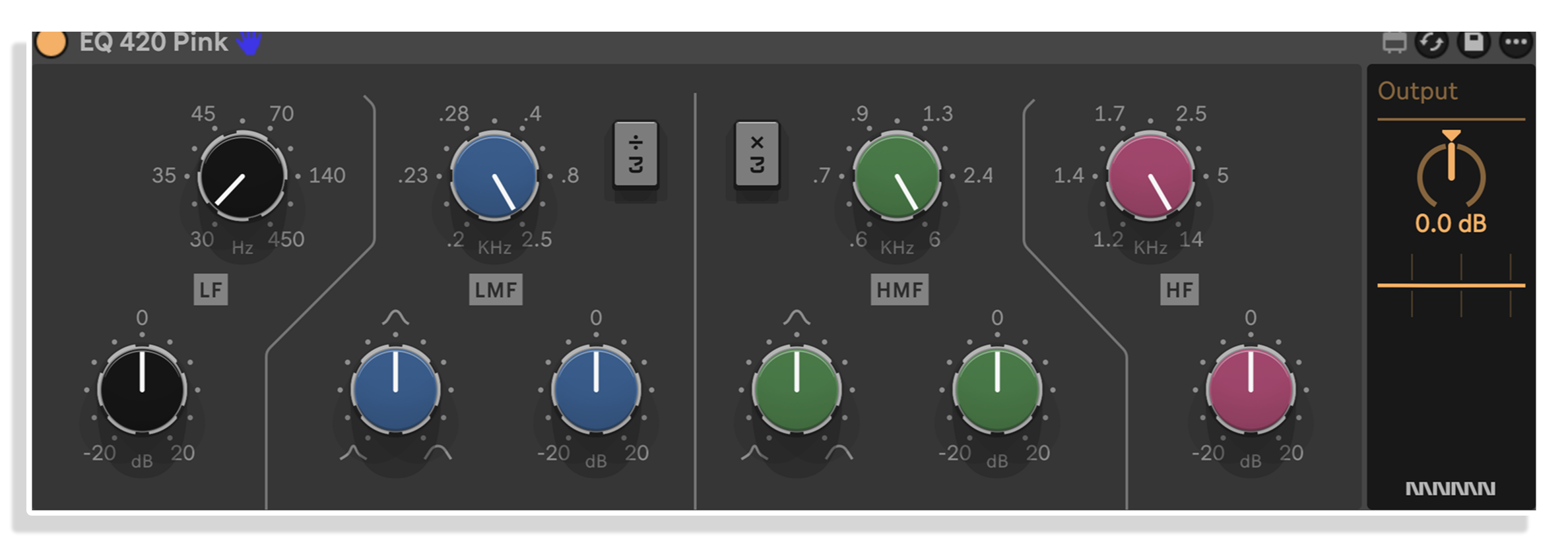
EQ 420 Pink
The Pink voice cut down to the four bands, light enough for every track.
Console 40
Dyn 432
Channel dynamics, with a compressor and an expander/gate to control each source.
Console 40
Bus 442
The summing amp. It adds console weight and colour and catches peaks before the master bus.
Important Information
CHANGELOG
v1.0 xc2xb7 26 September 2026
Initial release
v1.0 xc2xb7 26 September 2026
Initial release
INSTALLATION
Our Products are generally provided as Zip file downloads which in all cases will need to be extracted and saved to your hard drive prior to installation. Details on the different file type provided and what to do with them are below.
.alp Files – These are Ableton Live Packs and will either install directly into the Packs Section of the browser of Ableton Live or ask you to save them to your hard drive. For packs that install to the library, when you double click on them you will see a pop up window asking you to confirm that installation is ok as the files are described as “Legacy”. This is fine and you are ok to proceed, the packs are created using the format for an earlier version of Live and so remain compatible with the current version.
.amxd files – These are individual MaxforLive Devices and can be stored anywhere on your hard drive. We’d advise creating a folder for them and then adding that folder as a location within the Places section of Lives Browser.
LICENSE
END-USER LICENSE AGREEMENT FOR ISOTONIK STUDIOS SOFTWARE PRODUCTS.
PLEASE READ THE TERMS AND CONDITIONS OF THIS LICENSE AGREEMENT CAREFULLY BEFORE CONTINUING WITH THIS PROGRAM INSTALL.
This End-User License Agreement (referred to as “EULA”) is a legal agreement between an individual or a single entity (referred to as “LICENSEE”) and Isotonik Studios for the Isotonik Studios software product(s) which may include associated software components, media, printed materials, and “online” or electronic documentation (referred to as “SOFTWARE PRODUCT”). By installing, copying, or otherwise using the SOFTWARE PRODUCT, the LICENSEE agrees to be bound by the terms of this EULA.
This EULA represents the entire agreement concerning the program between the LICENSEE and Isotonik Studios and it supersedes any prior proposal, representation, or understanding between the parties. If the LICENSEE does not agree to the terms of this EULA, the LICENSEE should not install or use the SOFTWARE PRODUCT.
The SOFTWARE PRODUCT is protected by copyright laws and international copyright treaties, as well as other intellectual property laws and treaties. The SOFTWARE PRODUCT is licensed, not sold.
- GRANT OF LICENSE.
The SOFTWARE PRODUCT is licensed as follows:
(a) Installation and Use. Providing that the LICENSEE has paid any applicable license fees, Isotonik Studios grants the LICENSEE the right to install and use copies of the SOFTWARE PRODUCT on up to two computers in the LICENSEE’s possession that are running a validly licensed copy of the operating system for which the SOFTWARE PRODUCT was designed [e.g., Windows 10, macOS]. The computer(s) must be owned by the LICENSEE.
(b) Backup Copies. The LICENSEE may also make copies of the SOFTWARE PRODUCT as may be necessary for backup and archival purposes.
- DESCRIPTION OF OTHER RIGHTS AND LIMITATIONS.
(a) Maintenance of Copyright Notices. The LICENSEE must not remove or alter any copyright notices on any and all copies of the SOFTWARE PRODUCT.
(b) Distribution. The LICENSEE may not distribute registered copies of the SOFTWARE PRODUCT to third parties.
(c) Prohibition on Reverse Engineering, Decompilation, and Disassembly. The LICENSEE may not reverse engineer, decompile, or disassemble the SOFTWARE PRODUCT, except and only to the extent that such activity is expressly permitted by applicable law notwithstanding this limitation.
(d) Rental. The LICENSEE may not rent, lease, or lend the SOFTWARE PRODUCT.
(e) License transfer The LICENSEE may not transfer their license to the SOFTWARE PRODUCT to any third party. Any attempt to do so will be considered a violation of this EULA.
(f) Support Services. Isotonik Studios may provide the LICENSEE with support services related to the SOFTWARE PRODUCT for a period of 12 months following the date of purchase. Any supplemental software code provided to the LICENSEE as part of the Support Services shall be considered part of the SOFTWARE PRODUCT and subject to the terms and conditions of this EULA.
(g) Compliance with Applicable Laws. The LICENSEE must comply with all applicable laws regarding use of the SOFTWARE PRODUCT.
- TERMINATION Without prejudice to any other rights, Isotonik Studios may terminate this EULA if the LICENSEE fails to comply with the terms and conditions of this EULA. In such event, the LICENSEE must destroy all copies of the SOFTWARE PRODUCT in the LICENSEE’s possession.
- COPYRIGHT All title, including but not limited to copyrights, in and to the SOFTWARE PRODUCT and any copies thereof are owned by Isotonik Studios or its suppliers. All title and intellectual property rights in and to the content which may be accessed through use of the SOFTWARE PRODUCT is the property of the respective content owner and may be protected by applicable copyright or other intellectual property laws and treaties. This EULA grants the LICENSEE no rights to use such content. All rights not expressly granted are reserved by Isotonik Studios.
- NO WARRANTIES Isotonik Studios expressly disclaims any warranty for the SOFTWARE PRODUCT. The SOFTWARE PRODUCT is provided ‘As Is’ without any express or implied warranty of any kind, including but not limited to any warranties of merchantability, noninfringement, or fitness of a particular purpose. Isotonik Studios does not warrant or assume responsibility for the accuracy or completeness of any information, text, graphics, links or other items contained within the SOFTWARE PRODUCT. Isotonik Studios makes no warranties respecting any harm that may be caused by the transmission of a computer virus, worm, time bomb, logic bomb, or other such computer program. Isotonik Studios further expressly disclaims any warranty or representation to the LICENSEE or to any third party.
- LIMITATION OF LIABILITY In no event shall Isotonik Studios be liable for any damages (including, without limitation, lost profits, business interruption, or lost information) arising out of the LICENSEE’s use of or inability to use the SOFTWARE PRODUCT, even if Isotonik Studios has been advised of the possibility of such damages. In no event will Isotonik Studios be liable for loss of data or for indirect, special, incidental, consequential (including lost profit), or other damages based in contract, tort or otherwise. Isotonik Studios shall have no liability with respect to the content of the SOFTWARE PRODUCT or any part thereof, including but not limited to errors or omissions contained therein, libel, infringements of rights of publicity, privacy, trademark rights, business interruption, personal injury, loss of privacy, moral rights or the disclosure of confidential information.
Frequently Asked Questions
What is Console 40?
Console 40 is a Max for Live audio device suite modelled on the SSL SL 4000 series of large-format mixing consoles. It includes two EQ topologies (Pink and Black), a streamlined four-band EQ, channel dynamics, harmonic saturation, a mix bus processor and a bus compressor, all built component by component from the original hardware circuits.
What is the difference between EQ 422 Pink and EQ 424 Black?
EQ 422 Pink has gain-dependent bell widths: gentle moves stay broad and musical, while harder pushes tighten the bell automatically. It also has ×3 and ÷3 switches that extend the mid bands across the full frequency range. EQ 424 Black uses constant-width bells at any gain, making it the choice for precise, surgical work where a narrow cut should stay narrow however deep you go.
What is EQ 420?
EQ 420 is a streamlined version of the 422 Pink with four bands and a wider range of band interaction. It omits the additional filters and M/S options, which makes it faster to reach for when you need natural tone shaping without extra complexity.
What version of Ableton Live do I need?
Console 40 requires Ableton Live 12 Standard with Max for Live, or Ableton Live 12 Suite. It runs on both Mac and Windows.
What is the harmonic saturation in Console 40?
The harmonic saturation is modelled after the inductor-based circuitry found in classic passive EQ designs. It imparts a subtle, musical saturation that adds presence and richness, and is most noticeable on vocals, guitars, snares and synths.
Why does Console 40 model tolerances as well as circuits?
The original SSL SL 4000 consoles were built with component tolerances that meant no two channels measured exactly the same. Console 40 replicates those tolerances so that channels vary slightly from one another, matching the character of working on the real hardware.
In Depth
A Large-Format Console in Your Session
In 1977, Solid State Logic shipped its first mixing desk from a small workshop in Oxfordshire. By 1996, Billboard reported that 83% of that year’s number-one singles had been made on SSL consoles. Console 40 brings that lineage into Ableton Live, built component by component from the circuits, variants and tolerances that made those desks sound the way they do. No two channels are alike, because the original hardware was not either.
Console 40 is a suite of Max for Live audio devices, each modelled on a specific section of the SSL SL 4000 family. The suite covers the two EQ topologies that defined the console across its production life, a dynamics processor, harmonic saturation, and a bus compressor. Every device was designed to work alone or together, because that is how the original desk was used.
EQ 422 and EQ 424: Two Cards, Two Characters
Every channel of the original console carried a four-band parametric EQ with high- and low-pass filters. That card was redesigned several times across the desk’s life. Console 40 includes the two most significant versions: EQ 422 Pink and EQ 424 Black.
The EQ 422 is the broad-brush card. Its bells widen as you back off and tighten as you push, so gentle moves stay smooth and natural while harder boosts become focused on their own. That behaviour makes it the right tool for shaping overall tone rather than solving problems. Use it across groups and busses, for subtle polish on vocals and instruments, and reach for the x3 and divide-by-3 switches to place mid bells anywhere from the deep lows to the air above a mix. It suits a round, full tone for pop, R&B and hip-hop, and places vocal and keys bells exactly where a source needs them.
The EQ 424 is the precise, punchy card. Its bells keep the width you set at any gain, which means a narrow cut stays narrow however deep you go. That makes it the choice for detail work: tight drums, a low end with real weight, and sources pushed forward in a crowded mix. Many engineers ran both cards side by side, reaching for the Black for surgical moves and the Pink to shape the overall character. Console 40 includes both, because learning when to use each is what separates a good mix from a great one.
Band by Band
Both EQs share a filter section at the far left of the panel. The 424 spreads its high-pass evenly from 20 to 350 Hz with a gentle knee and a RES trim that adds a lift at the corner, tightening the bottom as it rolls away. Its low-pass sweeps from 3 to 24 kHz at a gentle 6 dB per octave slope that softens the top rather than cutting it hard. The 422 handles filters differently, and studying both behaviours in practice is where the understanding comes.
The low band on the 422 is always a shelf, running from 30 to 450 Hz with up to 20 dB of boost or cut. Set low, a few dB of boost fills out a thin kick without clouding the low mids. Turned up towards 450 Hz, the same shelf reaches into the body of guitars, piano and vocals, where a gentle cut clears mud and a boost warms a thin source. The 424 covers the same frequency range with up to 15 dB and adds a shelf-to-bell toggle, so the low band can centre on a frequency and leave the deepest lows untouched.
The low mid band on the 422 is modelled on inductor-based circuitry found in classic passive equalisers. It shapes the frequency spectrum and also imparts a subtle, musical saturation that adds presence and richness, which is especially noticeable on vocals, guitars, snares and synths. The band runs from 200 Hz to 2.5 kHz, with a divide-by-3 switch that drops it to 50 to 600 Hz for work on the deepest body of a sound. Small moves stay broad and gentle; push harder and the bell tightens on its own. The 424’s low mid covers 160 Hz to 2 kHz with a fixed-width bell that holds its Q at any gain, ideal for precise lifts and clean scoops.
The high mid band is where a sound gets its edge. Between 600 Hz and 6 kHz sit the presence of a vocal, the bite of an electric guitar and the crack of a snare, along with the harshness that tires the ear when there is too much of it. A small lift in the upper part of the range brings a part to the front of the mix. A narrow cut tames a piercing resonance without dulling the whole sound. Press x3 on the 422 and the range moves up to 1.7 to 17 kHz, where a bell can add sparkle to cymbals and hi-hats or open up the air above a vocal. The 424’s high mid runs from 600 Hz to 7 kHz with a fixed-width bell that holds at any gain.
Both EQs close with a high shelf from 1.2 to 14 kHz. The 422 offers up to 20 dB and stays a shelf throughout. The 424 offers up to 15 dB and adds a shelf-to-bell toggle, so the high band can be used to lift a chosen range in the air rather than everything above a corner frequency.
EQ 420: The Streamlined Option
Console 40 also includes the EQ 420, which is the 422’s four bands in a more streamlined form. The developer’s own preference runs to the 420 for most mixing tasks, because the wider range where bands interact suits the way he works. If four bells and M/S processing are what a session calls for, the 424 is the better choice. Both are available, because the material and the engineer’s ear should decide.
Dyn 432, Bus 44, Harmonic Saturation and Bus Comp 452
Beyond the EQ section, Console 40 covers the dynamics and colour stages of the original desk. The Dyn 432 handles per-channel dynamics. The Bus 44 manages bus routing and level. The Harmonic Saturation device adds the transformer and circuit character that the analogue signal path contributed in hardware. The Bus Comp 452 models the compressor that sat across the mix bus, the one that holds a whole mix together without drawing attention to itself. Each device was built from the original circuits and their tolerances, which means they interact the way the hardware sections did.
Built with Transparency in Mind
The developer, Nikita, wrote this manual because modern manufacturers rarely explain how their products work. Old service and user manuals were full of engineering detail that helped engineers understand and trust their tools. Console 40 follows that approach. The manual covers the electrical and audio engineering behind every device, with charts and plots, because an informed engineer makes better decisions. That transparency extends to the product itself: the circuits are documented, the design choices are explained, and the tolerances that give each channel its individual character are part of the model rather than an afterthought.
Console 40 runs in Ableton Live 12 Standard with Max for Live, or Suite, on Mac and Windows. It is a suite of devices that can be used individually or built into full channel strips, because that is how the original desk was always used.
More from Monomono
 ★ Popular
 ★ Popular
 -30%
-30%